




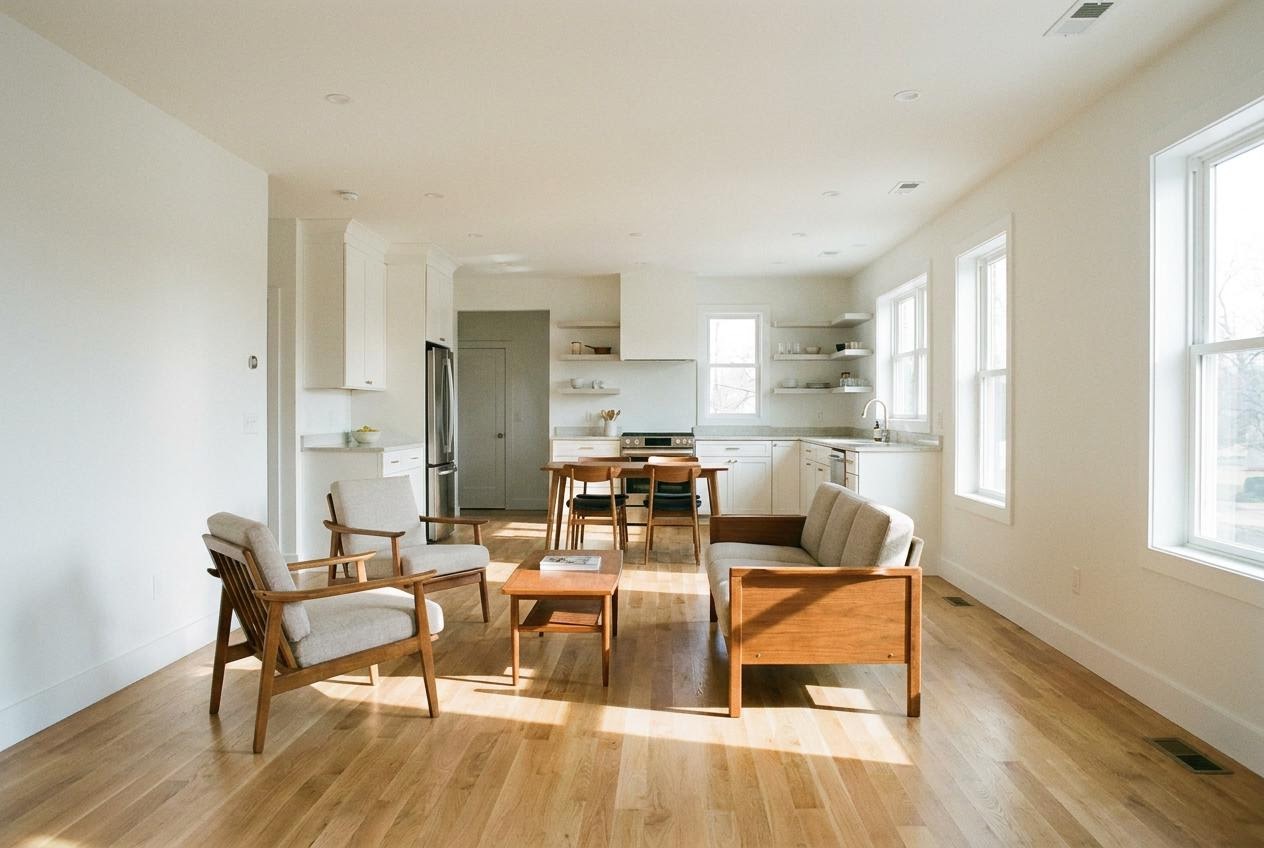
Drying a home is only half the job. Once the moisture readings are back to normal, there are still cut walls, missing flooring and bare subfloor to deal with. The repair phase is where reconstruction happens. For Grand Prairie homeowners, our crew installs replacements for anything unsalvageable and blends them with the existing finishes until the space stops looking like a job site.
No two repair jobs are the same size. On a small job it may be a few feet of drywall, new baseboard and paint. On a large one it can mean insulation, full sheets of drywall, subfloor, hardwood or laminate, cabinet boxes, trim and doors. We replace materials like for like where possible, and we tell you plainly when an exact match is not available so you can choose.
Nothing gets closed up until it is dry. Before any new material goes on, we confirm with a moisture meter that framing and subfloor are at normal levels. Cover wood that is still damp, and mold grows unseen behind the new paint. You also receive a written scope and schedule ahead of the work, which spells out what gets rebuilt and when.
Water Damage Repair Prevention Tips
A little prevention goes a long way in avoiding expensive restoration emergencies. Follow these tips from our IICRC-certified technicians:
- Store pictures of the finished work alongside the scope for future reference.
- When kitchens, bathrooms or laundry rooms are rebuilt, choose backer board and moisture resistant drywall.
- Photograph damaged materials before they are removed in case your insurer asks later.
- Future repairs match better when you have held on to extra flooring, tile and the paint information.
- Ask for final moisture readings before any contractor closes up a wall or floor.
- Ventilate with the bathroom exhaust fan while showering and afterward to protect new drywall.
Water Damage Repair Issues? We Can Help.
Our IICRC-certified technicians are standing by to help.
Call (313) 725-6466 TodaySigns It Is Time for Water Damage Repair
Catching these issues early helps you avoid costly problems and protect your property. Watch for these telltale signs that professional help is needed:
- Paint is bubbling, peeling or stained brown where water ran down the wall.
- Laminate or vinyl plank edges are swollen, curled or separating at the seams.
- At floor level, cabinet panels and bases show swelling, peeling or soft spots.
- Water under the tile left cracked grout lines or tiles that rock when stepped on.
- Since the water damage, certain doors drag on the jamb or miss the latch.
- Door casings and baseboards have warped or pulled off the wall surface.
- Wood floor boards stayed raised, cupped or crowned even once the moisture was gone.
Early Action Saves Money
Many water damage problems start small but can escalate quickly into costly emergencies. If you notice any of these signs, contact Grand Prairie Restoration at (313) 725-6466 for a prompt evaluation.
How We Handle Water Damage Repair
We follow a proven process to ensure every job is completed to the highest standards. Here's how we handle water damage repair from start to finish:
Confirm It Is Dry
Final moisture readings are taken on the subfloor, framing and any drywall left in place. Only when each material reads normal does rebuilding start, which keeps damp spots from being sealed inside.
Write the Scope
You receive a room by room list of what will be replaced, the materials we plan to use and the expected schedule. On jobs with an active claim, our team reconciles that scope with the adjuster.
Reconstruct and Install
Open wall cavities get new insulation, the subfloor is fixed, and drywall goes up, then is taped and finished. After that we install trim, cabinetry and floors, ordering the work so completed surfaces are not damaged.
Final Finishes and Walkthrough
We match texture, prime and paint, and reinstall doors, baseboards and hardware. Together we then walk through each room, and every listed item is corrected before the job is closed.
Can You Handle Water Damage Repair Yourself?
While some minor restoration tasks can be handled by handy homeowners, most water damage work requires professional expertise, specialized equipment, and proper safety training. Here's a comparison:
| Factor | DIY Approach | Professional Service |
|---|---|---|
| Insurance paperwork | Writing your own estimate | Estimate in a format insurers accept |
| Timeline | Whenever free time allows, for weeks | Scheduled crew, set sequence |
| Permits | Easy to miss or skip | Handled where the work requires them |
| Wall finish | Patch outline shows through paint | Seams taped, texture matched |
| Checking for moisture | A hand on the wall | Readings taken before anything is covered |
Questions About Water Damage Repair?
Call Grand Prairie Restoration to discuss your water damage repair needs with a IICRC-certified technician.
Call (313) 725-6466 TodayWhy Professional Water Damage Repair Matters
Repair after water damage is not ordinary remodeling. A rebuilder must know the path the water took, the harm it caused and if the structure hidden by the wall is actually dry. Because our crew has the drying-phase moisture logs, it knows where studs were wet, what subfloor received treatment and which areas deserve another check. Knowing the background stops issues from being hidden behind new wallboard and a coat of paint.
Then there is the craft of making things match. You will see a visible patch every single day. Wall texture is blended, paint is feathered out to natural breaks, and flooring is sourced to line up with the boards already there when available. If nothing matches, you get options from us, for example new flooring run to a doorway. Our team pulls any permits the job needs and sends updates to your insurance company.
Frequently Asked Questions About Water Damage Repair
Get Water Damage Repair Help Today
The sooner you call, the sooner we can help. Reach Grand Prairie Restoration for same-day service.
Call (313) 725-6466 Today