Reviews





The quote is free and you see the price before work begins. No surprise charges at the end.
Our crews are certified, insured and equipped for hardwood floor water damage. They find the hidden moisture and dry it properly.
You focus on your home. We put together the photos, readings and reports your insurance company needs.
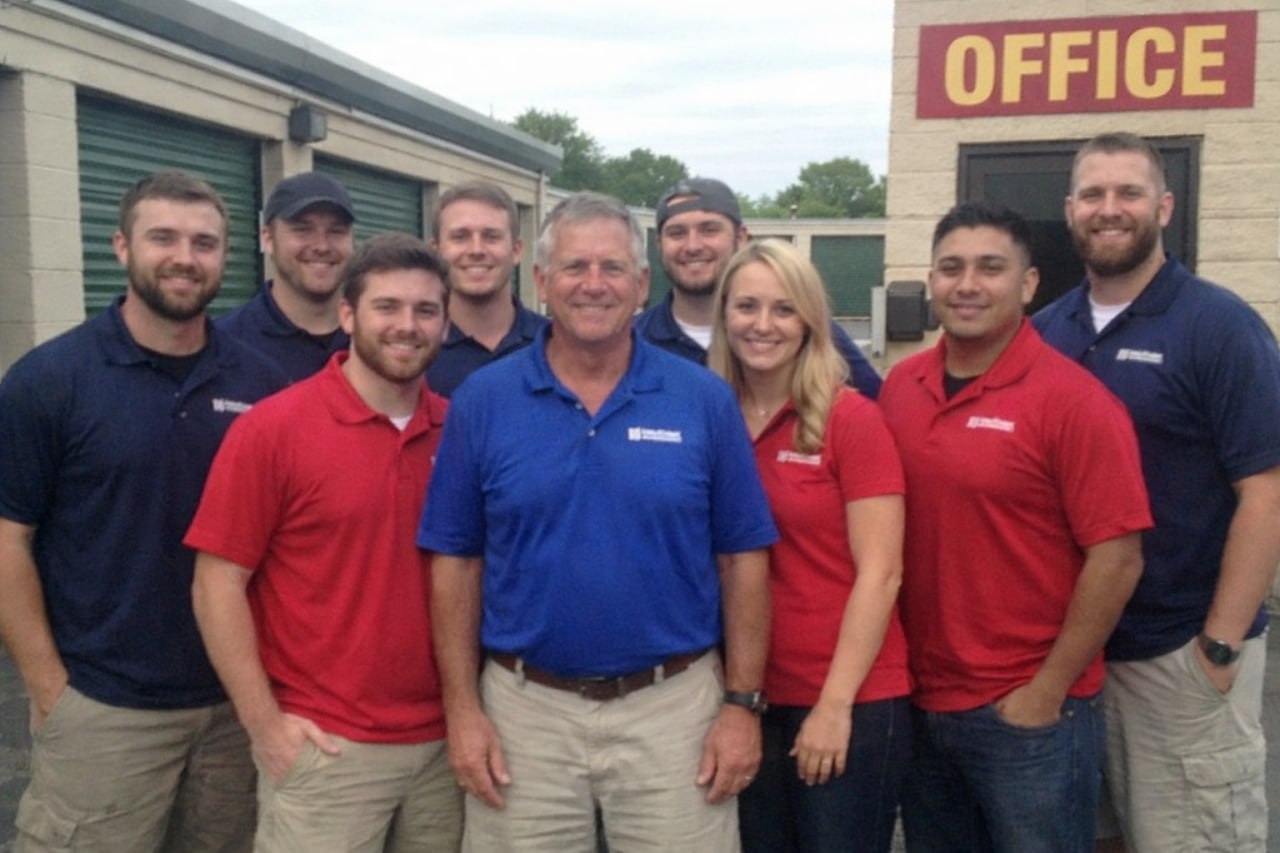
When you call about hardwood floor water damage, you reach a restoration team that works in Grand Prairie every day. We tell you what it will take, give you a clear quote and get a crew moving.
It does not take long for water to change a wood floor. Boards take on moisture from below and from the edges, swell against each other and start to cup, with the edges rising higher than the center. A floor in this condition is not necessarily ruined. When drying starts within the first few days, solid hardwood frequently lies flat again. Success depends on a slow, even drying rate that draws water from the flooring and from the subfloor beneath it.
Drying mats are how our team handles wet wood floors. A vacuum unit attached to the sealed mats lifts water out by way of the seams and the wood itself, and dehumidifiers hold the room air at a dry level. Expect it to run a week or more, which is longer than drywall or carpet needs. Sanding has to wait until the wood is fully dry. A cupped floor sanded early ends up crowned afterward.
We save what can be dried properly and remove only what cannot. Moisture readings make that call, not guesswork.
Call (313) 725-6466| Material | Can usually be saved when | Has to be replaced when |
|---|---|---|
| Engineered hardwood | Brief surface water with no swelling at the edges | Any plank peeling into layers, puffed at edges or damp beneath |
| Solid hardwood | Flooring still attached with cupping only, and drying begun in days | Buckled, split or blackened boards, or any sewage contact |
| Floor finish | Mild haze that fades or can be buffed away after drying | Stained or flaking topcoat, fixed only by a sand and refinish |
| Plywood subfloor | Flat, solid panels that dry back to normal readings | Panels with visible mold, softness or plies coming apart |
| OSB or particle board | Only OSB showing no edge swell | OSB with puffed edges, and almost all particle board that got wet |
Seams let the water through, and it fans out in the layer between flooring and subfloor. Underneath, the wood remains wet even after the face has been dried.
Boards swell and the edges rise. Finish may turn cloudy. The bare underside of the boards and the subfloor are where mold can start.
Swelling builds pressure across the floor. Boards crush against each other, fasteners loosen and sections can begin to lift off the subfloor.
Expect a good chance of mold below, dark staining and boards that have buckled. Drying is usually no longer enough, and the bulk of the wet flooring has to be replaced.
We take readings on the boards, the subfloor and unaffected flooring nearby for comparison. The comparison shows how far down moisture reached and how likely the floor is to recover.
We extract any standing water immediately and clear furniture and rugs from the wet section. Cutting off the water entering the joints early keeps swelling down.
A vacuum system hooked to mats sealed on the surface lifts moisture out of the boards from above. To avoid cracking, dehumidifiers keep conditions steady and the wood dries at an even rate.
Readings are logged every one to two days and the equipment stays until the wet zone equals the dry comparison areas. At that point you hear from us if it needs nothing, some replacement boards, or a refinish.
Moisture beneath flooring does not stay put. It can reach under cabinets, wall plates and into neighboring rooms, or drip through to the ceiling of the level beneath.
High heat or too much airflow pulls moisture from the surface faster than the core can follow. Lasting gaps and split or cracked boards are the usual outcome.
Between the boards and the subfloor there is only darkness and still air. Mold in that layer cannot be seen from the room, and a musty odor is usually the first sign.
If cupped boards get sanded level before they dry, the high edges are ground away. After the moisture leaves, each board is left with a raised center, which is crowning.
Not seeing your question? Call and ask. It costs nothing to talk it through.
Call (313) 725-6466Take action now and prevent costly damage. Grand Prairie Restoration is ready to help.
Call (313) 725-6466 Now